
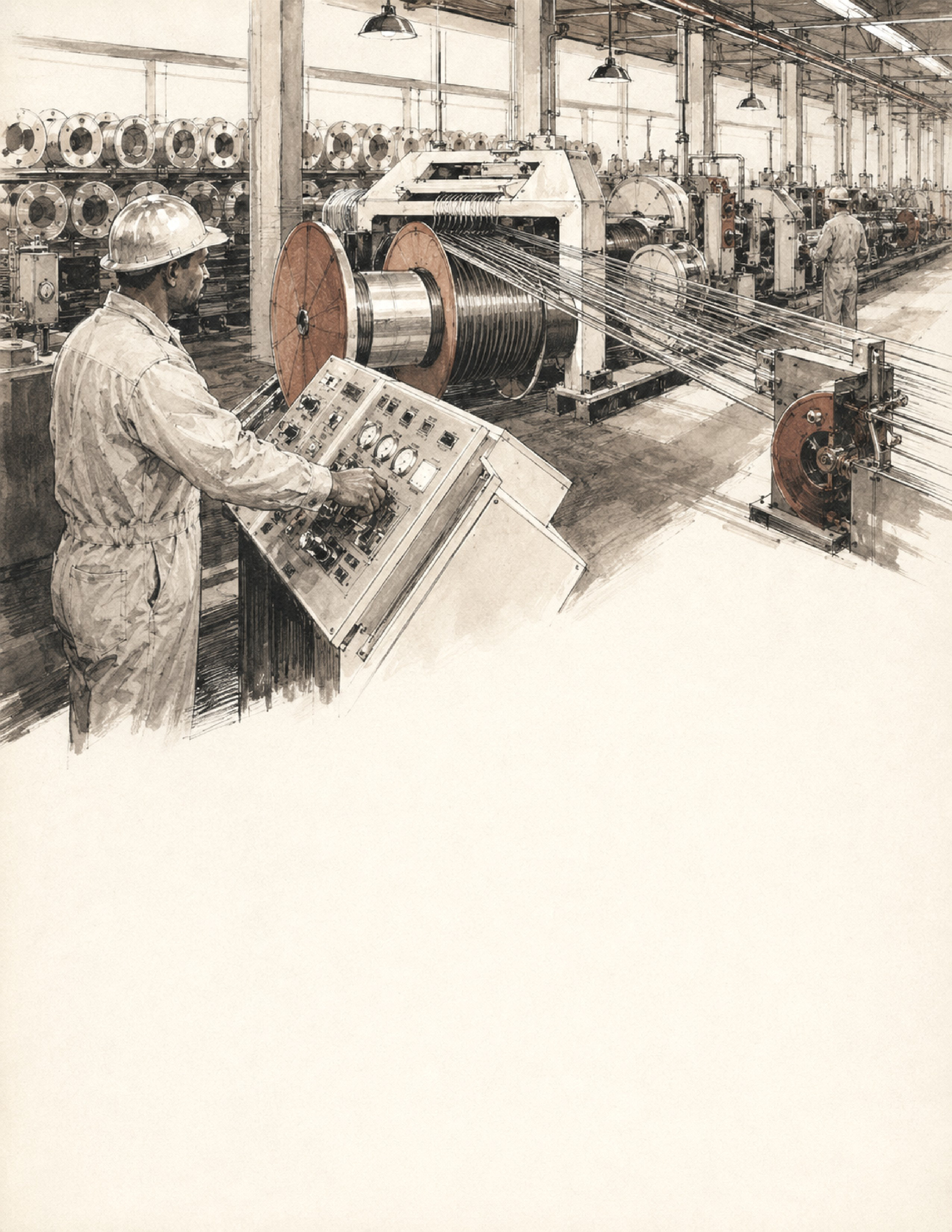
This playbook opened with the story of a wire and cable manufacturer’s 1976 transition to 100 percent employee ownership, made possible only by a federal grant converted to state lending capital and re-lent through a development finance agency. A private lender provided debt layered above the state’s, and the ESOP transaction closed on competitive, sustainable terms. The Okonite Company remains 100 percent employee-owned to this day, and the revolving loan fund that made this possible revolved as intended: the New Jersey Economic Development Authority (NJEDA), which administered the loan, went on to make nearly 850 loans against a set of five revolving loans, of which Okonite’s was one.
State development finance agencies across the country have a clear and present economic imperative to rebuild the capacity that NJEDA pioneered in 1976. Over half a century of ESOP performance has shown that employee-owned firms build wealth for workers who contribute none of their own personal capital, lay off fewer workers in downturns, default at lower rates, and keep ownership and decision-making anchored in the communities where the firm operates. At a time when over half of the businesses in every single U.S. state are poised to undergo an ownership transition in the coming decade, employee ownership must be a sufficiently competitive option for retiring business owners97; absent that, states will see millions of small- and medium-sized businesses shutter or be sold to out-of-state buyers, with the job loss and tax base erosion that follows. Currently absent in most states is the robust financing architecture necessary to scale employee ownership. Fortunately, state development finance agencies today are considerably more mature and sophisticated than NJEDA was when it made its 1976 Okonite loan and are well-positioned to realize this opportunity.
The case for building this financing capacity is made even more urgent by the diffusion of artificial intelligence across the American economy. The small- and medium-sized firms approaching ownership transitions (many of them manufacturers, contractors, and service firms) are the same firms whose margins AI adoption stands to expand over the coming decade. In a conventional firm, it is reasonable to worry that such gains from automation may come at the expense of the workers themselves; an employee-owned firm, where the distinction between capital and labor collapses, reduces this risk substantially. Because employee owners capture the gains from productivity improvements, employeeowned firms have structural incentives to deploy technology in ways that augment their labor instead of replacing it. Evidence of ESOP performance in recessions bears this out, as employee-owned businesses have tended to retain workers during downturns at higher rates than comparable firms. In the places where automation does change the shape of work, employee owners hold a capital claim, so the gains flow into their ESOP accounts rather than to an outside investor’s.
States need not wait to position employee ownership as a response to the business succession crisis and the question of who captures the gains from artificial intelligence. They can implement many of this playbook’s recommendations at modest cost through existing authorities that agencies already hold; the components that do require legislation are thoroughly precedented in development finance and overwhelmingly bipartisan. Compare this to 1976, when this capacity was largely improvised as a crisis response by a handful of business leaders and government officials working to prevent the closure of a plant in a deeply distressed New Jersey community. The institutions and instruments needed to expand employee ownership exist in every single state, and the scale of this opportunity is unprecedented and may not reoccur for generations. The states that capitalize on this opportunity will be reclaiming a capability American development finance has proven it can administer, and in doing so will help decide whether workers are empowered and share in the next era of American capitalism.
Sources
Source numbering follows the full playbook.
- Lafayette Square Institute, 535 Insights (2026) (state-level analysis of business succession exposure).